Last November, I wrote about the Reflection Frame and its paper-like e-ink display. It was the first time in years that something truly new happened in the digital picture frame world.
A lot has happened since then.
Colour e-ink frames have gone from curiosity to a real product category. One e-paper manufacturer even claims that at CES 2026, ePaper frames made up almost two-thirds of all digital photo frames on show.
So what has the little company that was early to this party done in the meantime?
It has made its frame smaller. The new Reflection Frame 10" (the company calls it the "Ringlet") joins the original 13.3-inch model (now called the "Skipper").
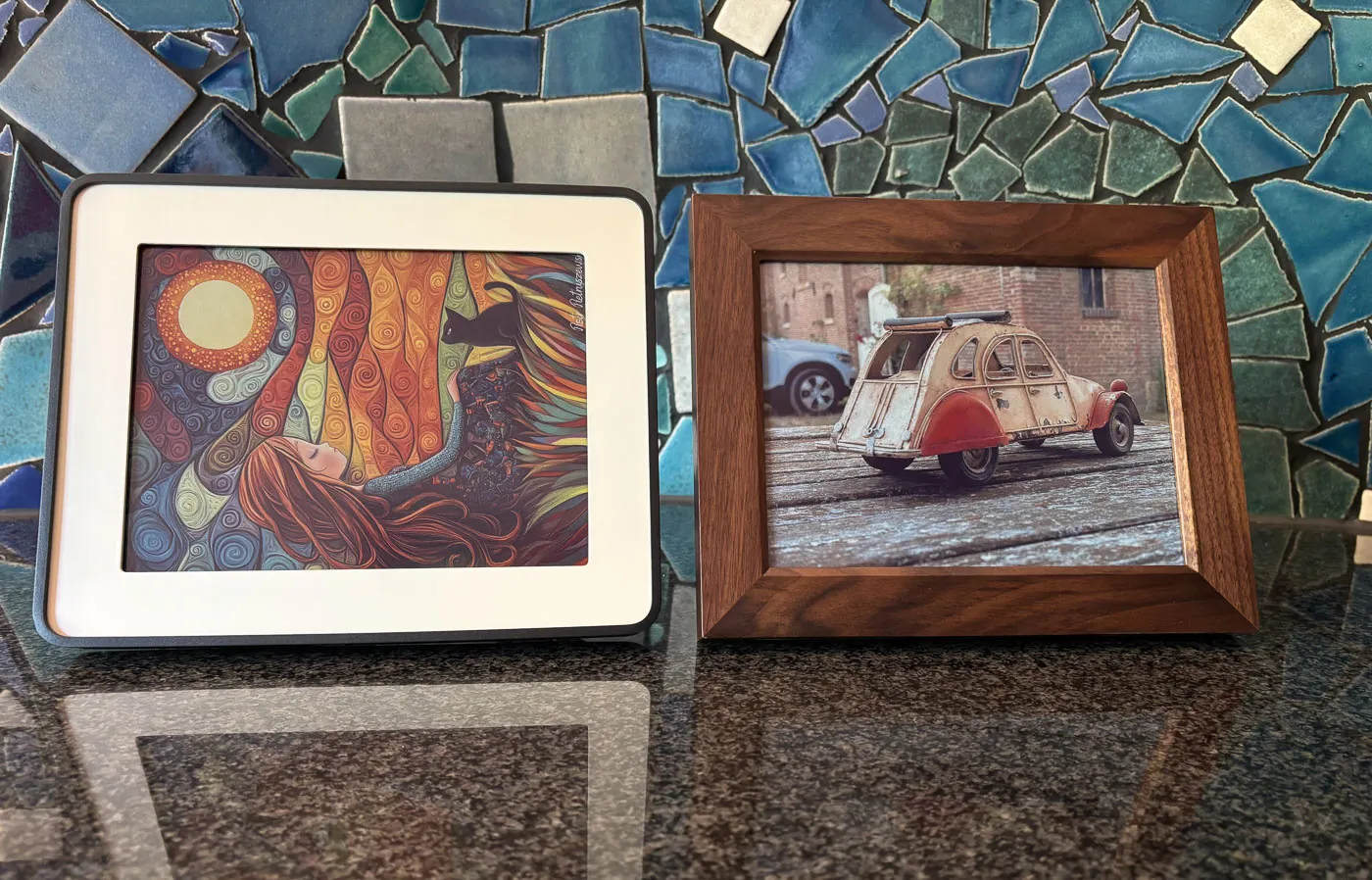
This year, I have been testing two of the new 10-inch frames: one in black aluminium and one in solid walnut.
My tests are unbiased. There are no financial donations to be disclosed, and this is not a sponsored article. Reflection Frame has supplied me with two review units for this test, and that is all.
The Reflection Frame brand, one year on
Behind the Reflection Frame is Creative Design Worx, a small design studio from Menlo Park, California. Its Kickstarter campaign in January and February 2025 asked for $10,000 and ended with $177,240 from 594 backers. That was enough to get the frame into production.
What I find reassuring is that the company has not changed its philosophy one bit. Many brands would have used the success to add a cloud service, an account and, sooner or later, a subscription. Reflection Frame hasn't. There is still no Wi-Fi, no account and no monthly fee. Your photos stay on your phone and, in the company's words, "are never sent to our servers."
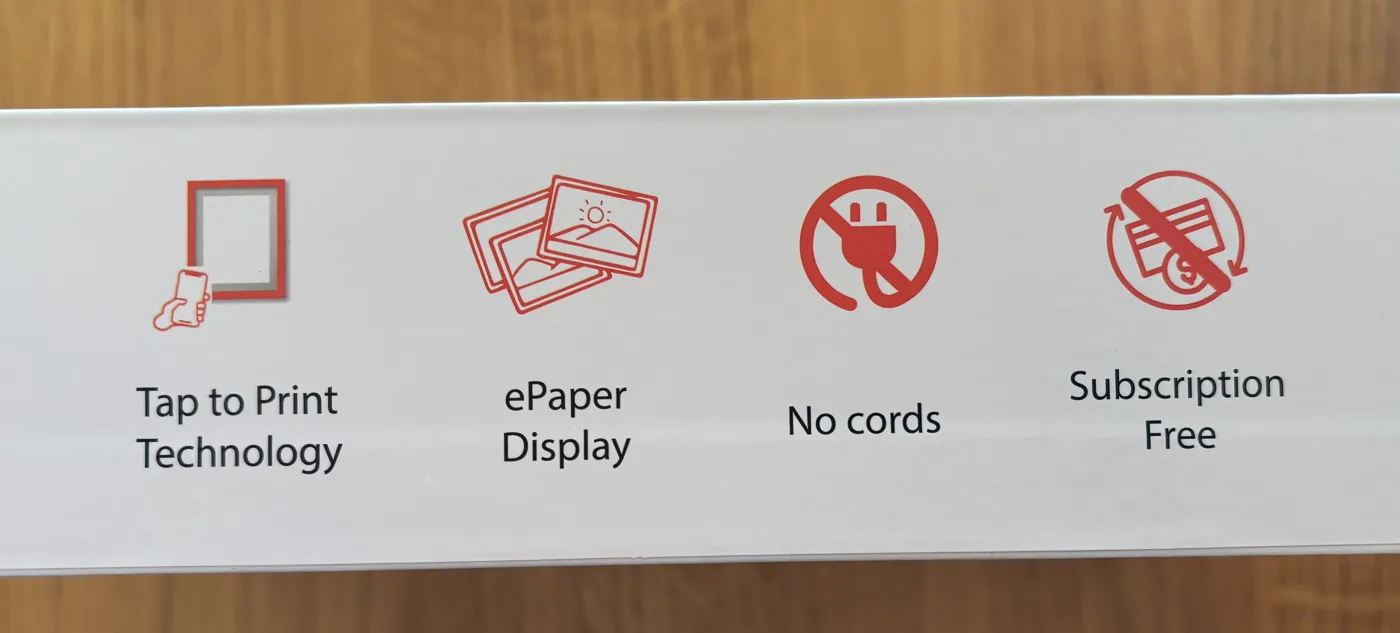
The four symbols on the side of the box sum it up: tap to print, ePaper display, no cords and no subscription.
This matters more than it may sound. Since the frame doesn't depend on a server, it will keep working even if the company one day stops operating. Remember what happened to Memento owners when the servers were switched off? That can't happen here.
The lineup today looks like this:
- Reflection Frame Skipper (13.3"): Classic Black and Pure White for $349.99, Solid Oak and Solid Walnut for $369. These are now "Revised Editions" where the mat sits behind the frame, which looks more like a traditional picture frame.
- Reflection Frame Ringlet (10"): black aluminium or solid walnut, officially $249.99, currently sold for $199.99 in the US. In Europe, both versions currently cost €187.95.
What is different about the 10-inch frame?
The obvious answer is size. The 10-inch frame measures 26.3 × 21.2 × 2.5 cm and weighs 800 grams. The 13.3-inch model is about 30 × 40 cm and 1.1 kilograms.
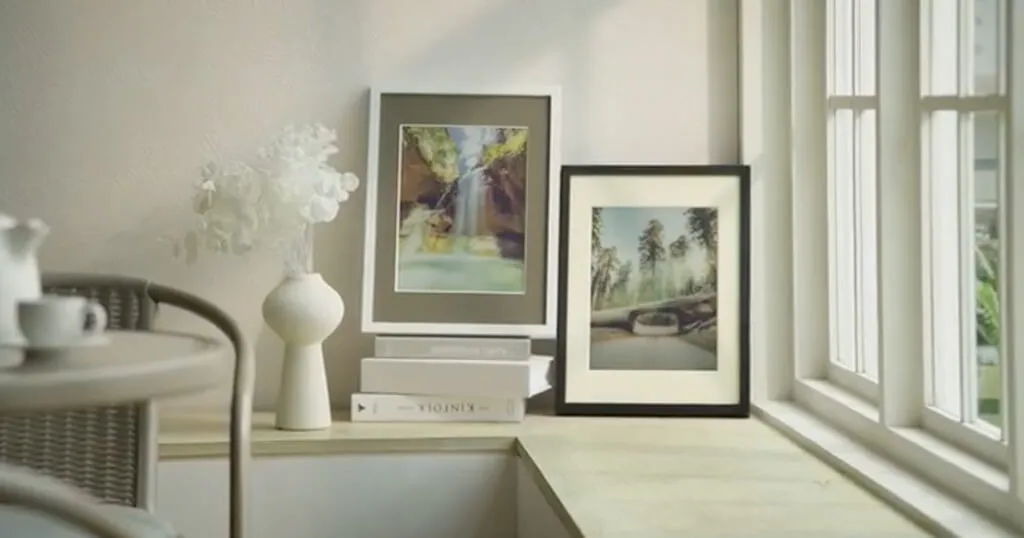
That makes a real difference in where you can put it. The big one wants a wall. The small one is happy on a bookshelf, a sideboard or a desk, or in a small group of frames on the wall where the larger model would dominate.
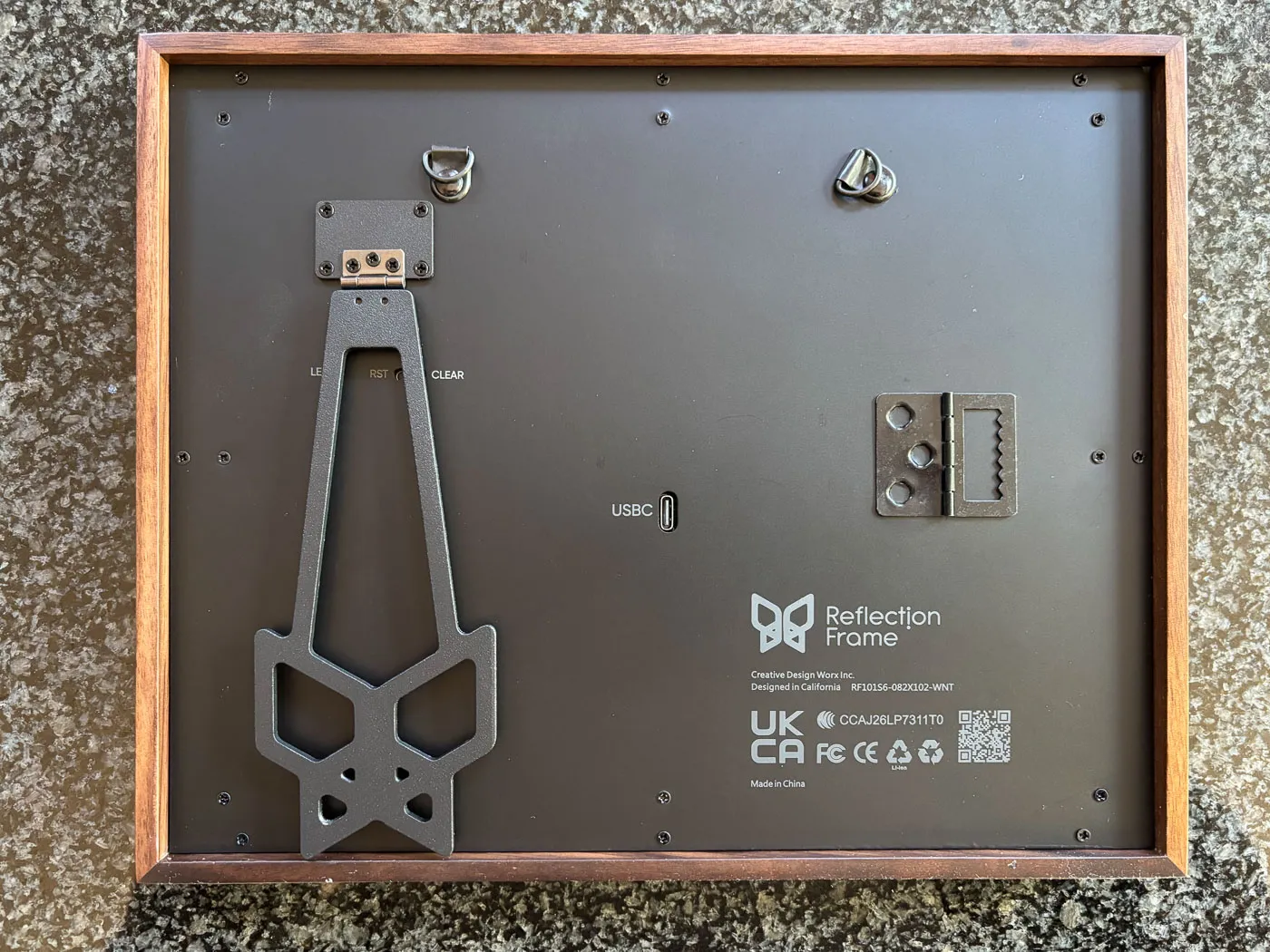
On the back, there is a fold-out stand in the shape of a butterfly, two D-rings and a sawtooth hanger for the wall, and the USB-C port for charging.
The less obvious answer is sharpness, and I think this is the most interesting thing about the new model.
Everything else is the same as before. There is a 5,000 mAh battery, charged by USB-C, and the company quotes up to two years between charges if you change the picture three times a day. There is still no Wi-Fi, and you still send a picture by tapping your phone to the frame. One small change: on the 10-inch model, you tap the center of the frame instead of the corner.
Black or walnut?
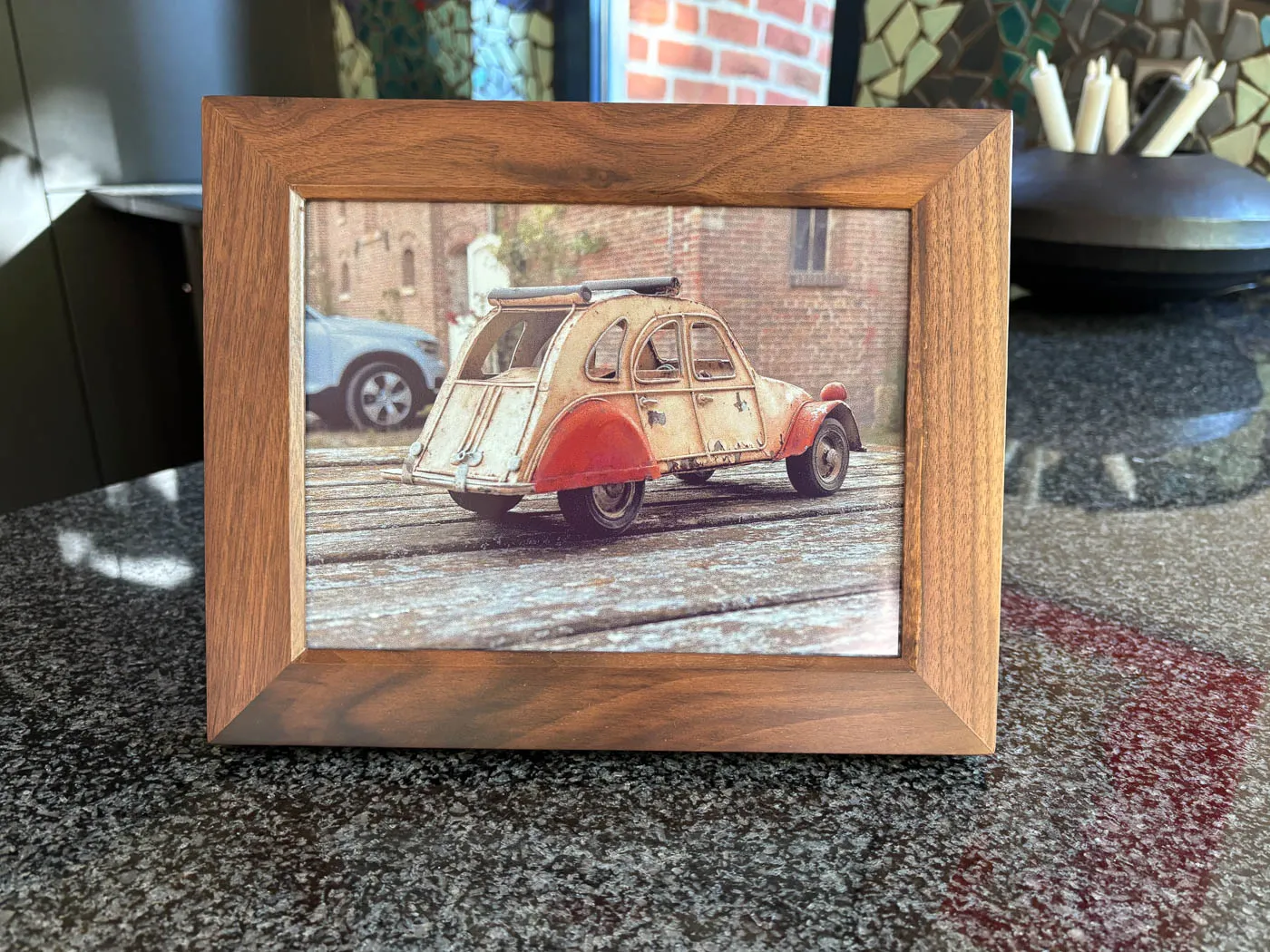
I have the two frames next to each other, and they create quite a different mood.
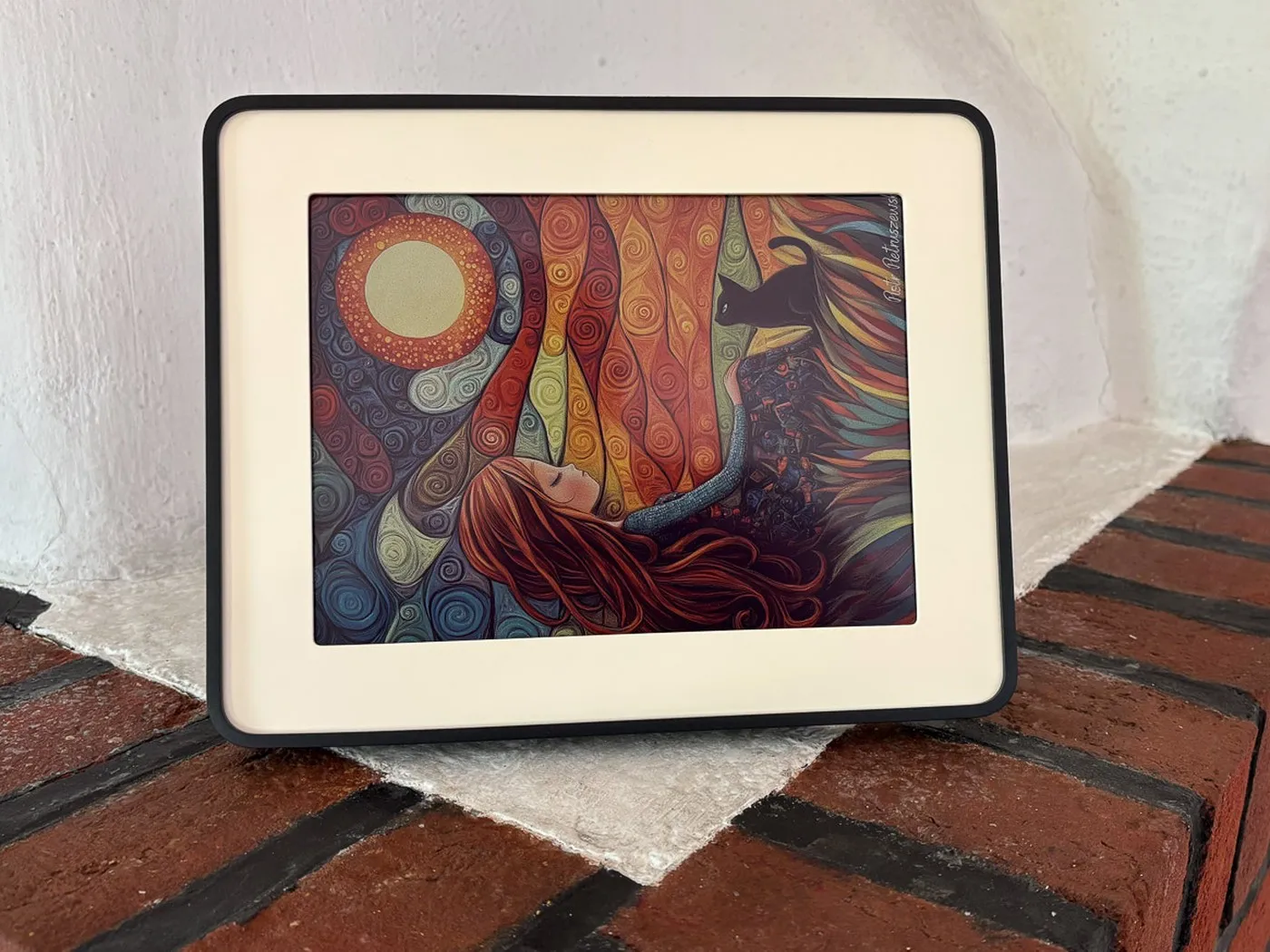
The black aluminium version is the modern one. It works well with black-and-white photography and with graphic, colourful artwork.
The walnut version is the warmer one. It looks like a proper piece of furniture, and I found it works best with paintings, landscapes and older family photos, anything with earthy colours.
Since both come with the same electronics and the same price, this is purely a matter of taste.
The technology: what Spectra 6 can and can't do
Let me quickly recap how the display works, because it explains everything you will like and dislike about this frame.
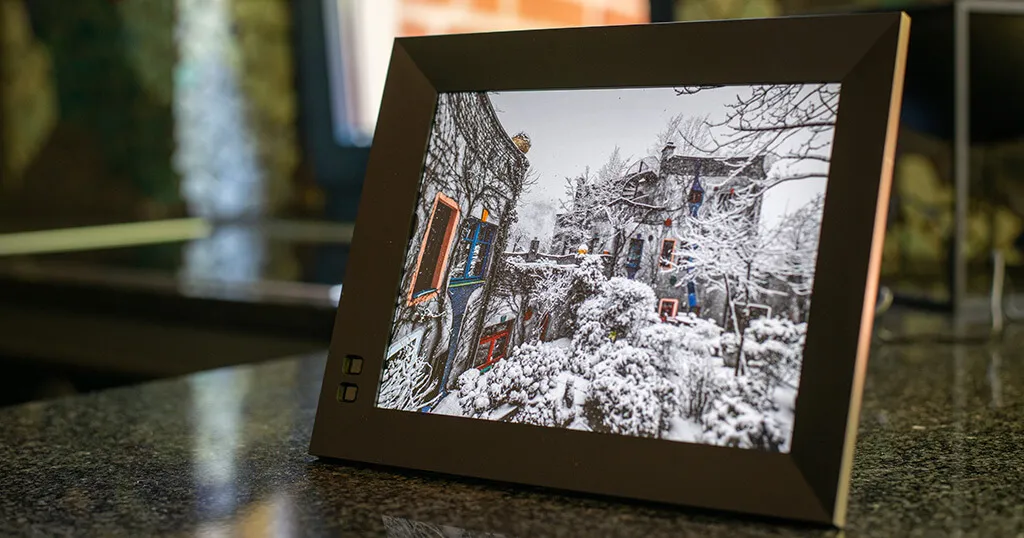
The Reflection Frame uses E Ink Spectra 6. Inside each tiny cell are coloured pigment particles, which are pushed into place by an electric charge. Once they are in place, they stay there without needing any power. That is why the frame can show the same picture for months without being plugged in.
As the name suggests, Spectra 6 knows six "ink" colours: black, white, red, yellow, blue and green. Every other colour has to be mixed by placing dots of these six colours next to each other, a technique called dithering. It is the same principle as a newspaper print, and from a normal viewing distance, your eye blends the dots into a full picture.
This has a few consequences that every reviewer I have read agrees on, and I can confirm them:
- Colours are softer than on an LCD. Think fine-art print, not iPad.
- Magenta, purple and some pinks are difficult. Both Root-Nation and YouTuber Jeffrey Moss found that these tones don't come out quite right, since they have to be mixed from red and blue.
- Pure white is not paper-white. It is more of a light grey, similar to the pages of an e-reader.
- A picture change takes a while. The screen flashes a few times while the pigments rearrange themselves. It takes around 40 seconds for a full upload and refresh.
- You need light. There is no backlight, so in a dark corner the picture will look dull. With daylight or a lamp nearby, it comes alive.
Here is what a picture change looks like on the walnut frame, from the first flash to the finished image:
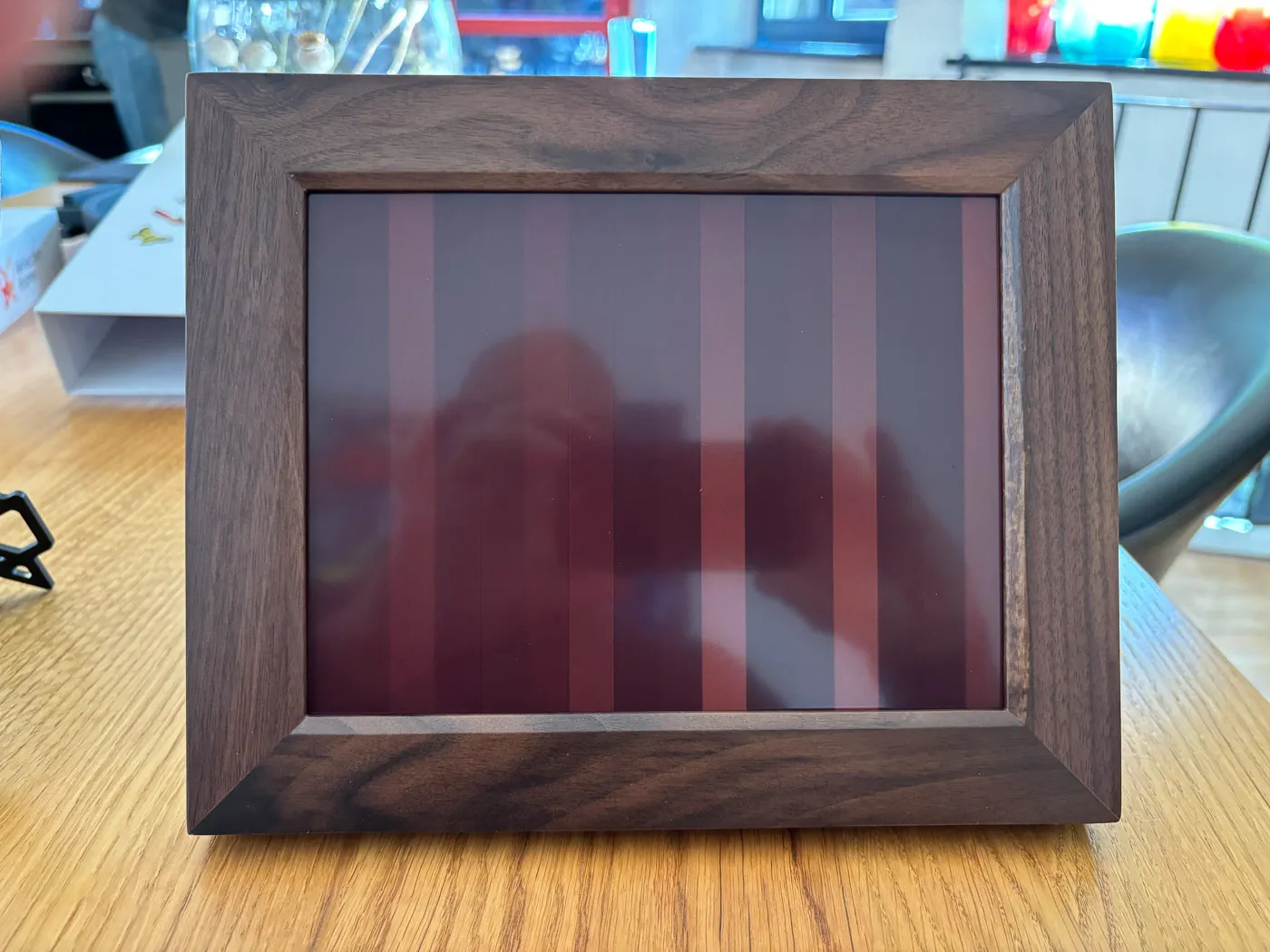
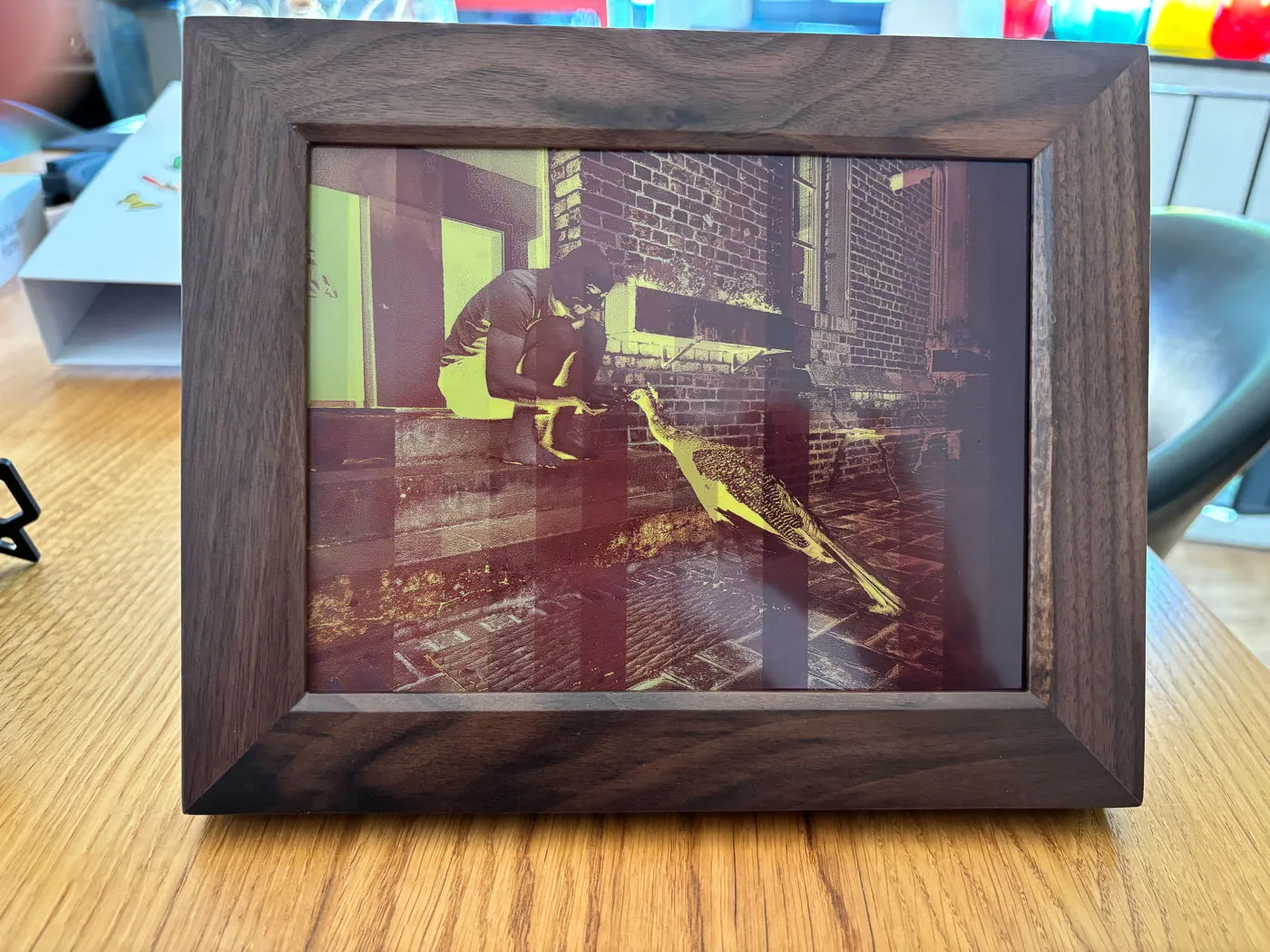
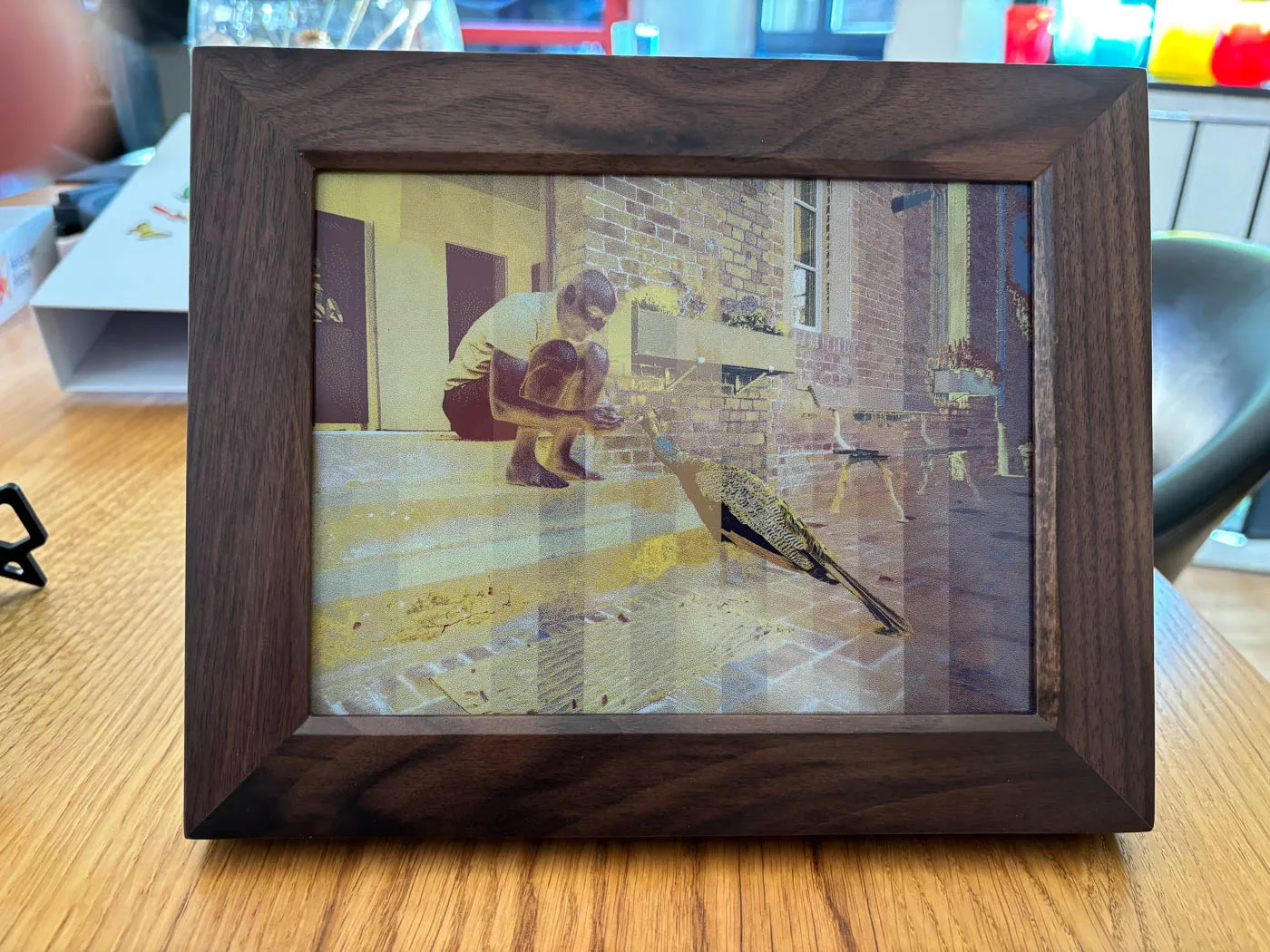
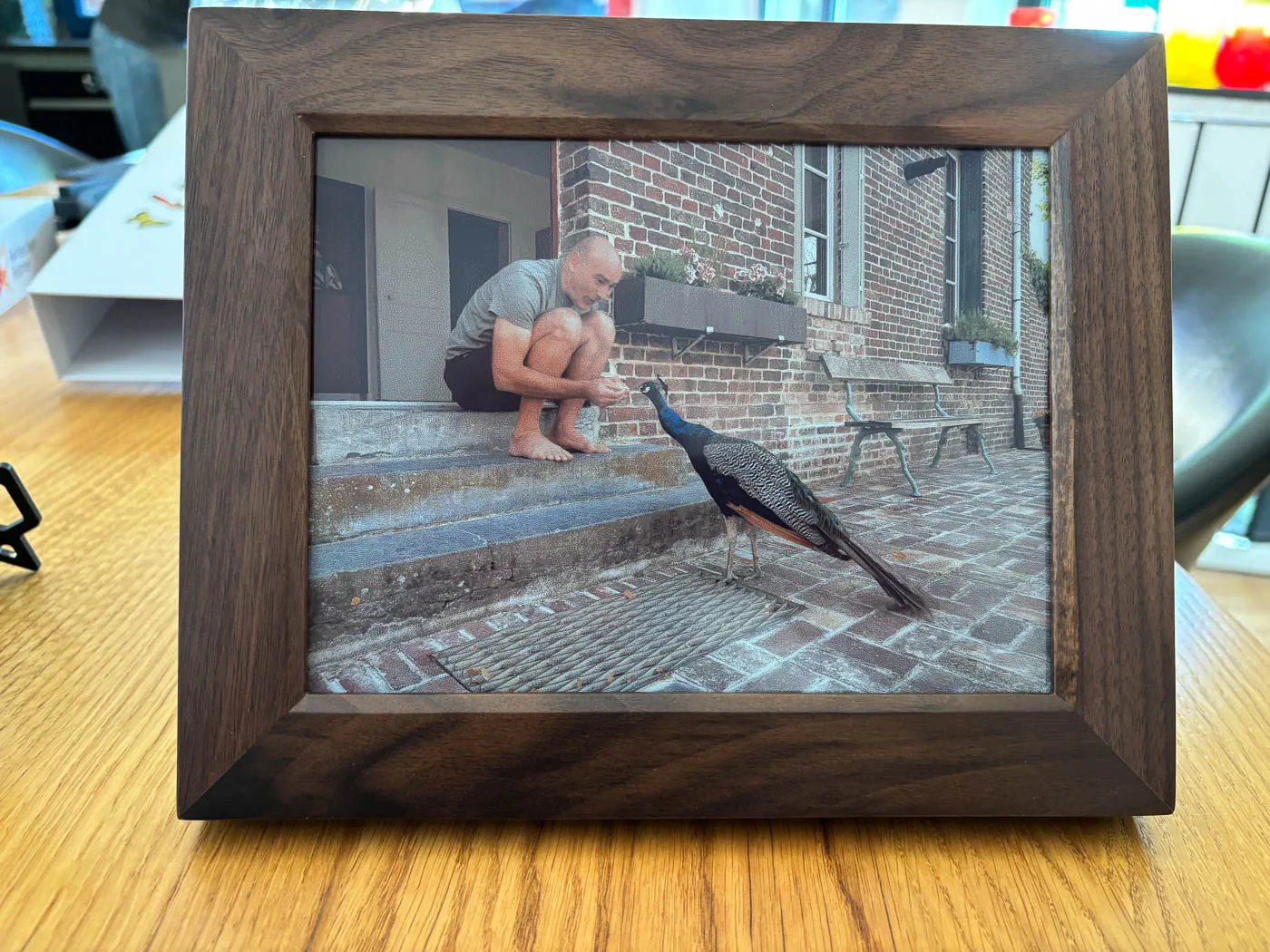
What I appreciate is that there is still no glare. Unlike a glossy LCD frame, you can hang it opposite a window. Strangely, the photos above show some glare, but in reality I couldn't see any noticeable glare.
The software
The Reflection Frame app for iOS and Android has had a few updates since last year. The current version added an improved editing function and a multi-language user interface.
The workflow is still the simplest I know. You pick a photo, crop it, tap your phone to the center of the frame, and wait. The phone vibrates when it has found the frame, a progress bar counts to 100%, and the picture appears. No setup, no Wi-Fi password, no account.
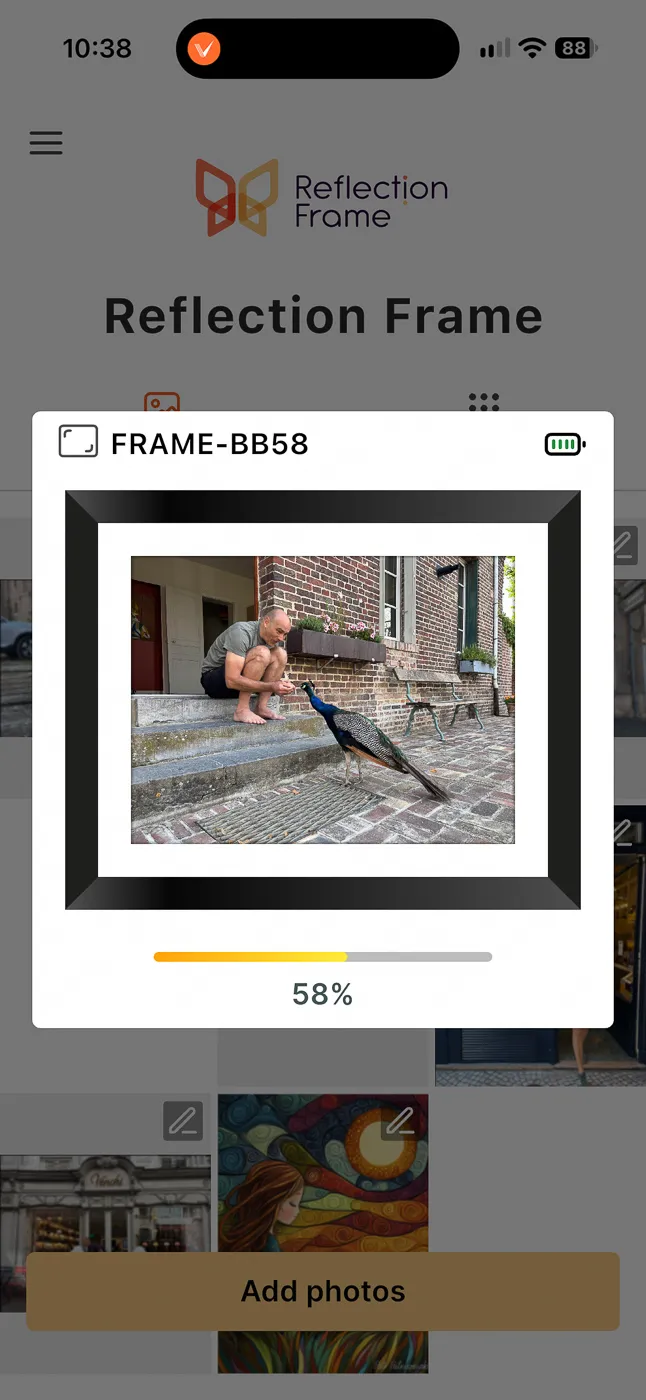
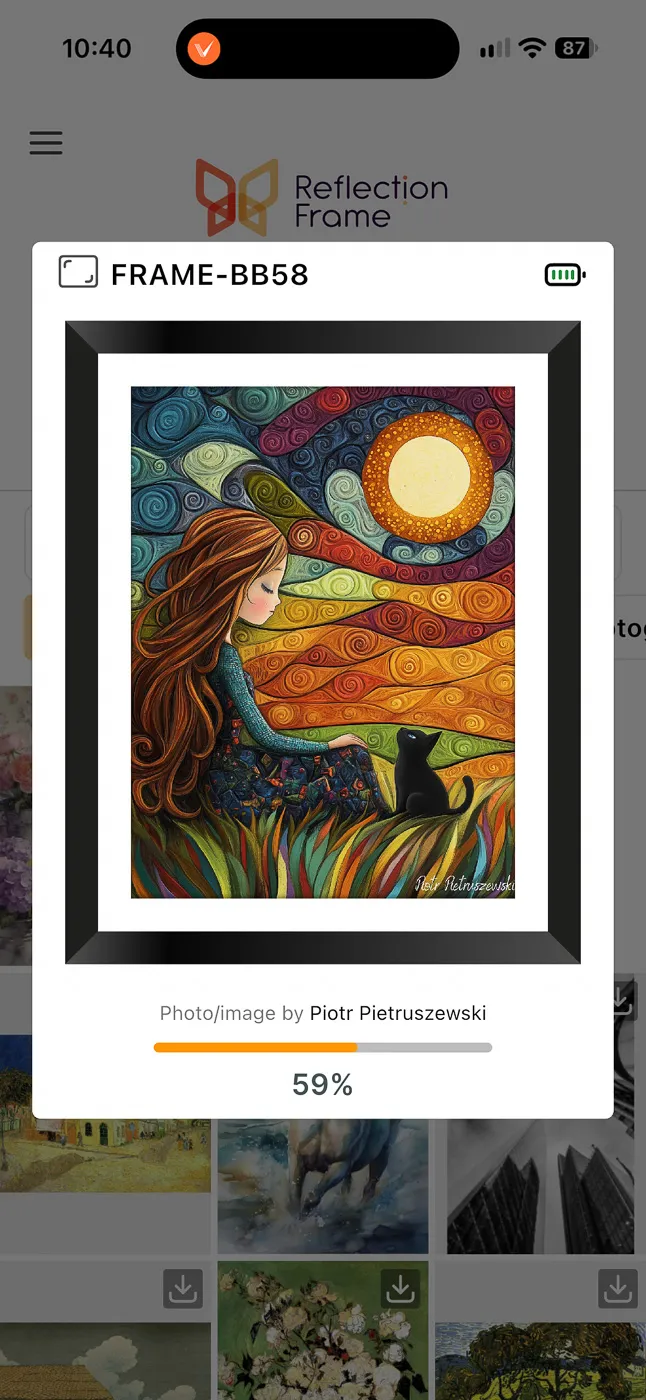
The one real limitation remains the same as last year: the frame shows one picture until you change it. There is no automatic rotation and no remote family sharing. If you want grandma to receive the latest holiday pictures automatically, this is not the frame for you. If you want a picture that stays on your wall until you decide it's time for a new one, it's perfect.
A few tips for better pictures
After some time with the two frames, these are the things that made the biggest difference:
- Choose bright, high-contrast pictures. Dark, moody photos look flat on e-ink.
- Avoid pictures dominated by magenta or purple. Sunsets with a lot of pink are the typical problem case.
- Artwork works wonderfully. Paintings, illustrations and posters look like prints, since they often have clear shapes and a limited colour palette. The app's free gallery is a good place to start.
- Black-and-white photos look great, especially on the black frame.
- Place the frame where there is light. Near a window or under a lamp is ideal.
How does it compare?
When I reviewed the first Reflection Frame, it was almost alone. Today, there are several colour e-ink frames, most of them using the same Spectra 6 panel.
The best-known is probably the Aura Ink for $499. It has Wi-Fi, family sharing through the Aura app and a battery that lasts about three months. It is the better choice if you want photos from your family to arrive automatically, but it depends on Aura's servers and is, at the time of writing, not available in Europe. There are also crowdfunded frames like the Bloomin8, which raised over 2.3 million Australian dollars, and large-format displays like the PocketBook InkPoster.
The Reflection Frame stays the purist in the group: no network, no cloud, no subscription. And with the 10-inch model at $199.99 to $249.99 in the US and €187.95 in Europe, it has also become one of the more affordable colour e-ink frames I know of.
Conclusion
A year ago, I wrote that I liked the Reflection Frame. I still do, and the new 10-inch model is, in my view, the better choice for most people.
It is cheaper, it is sharper, and it fits in more places. What it can't do is the same as before: it won't replace an LCD frame with bright colours and slideshows, and you have to change the picture by hand.
But that is not what the Reflection Frame is trying to be. It is a print that can change, and for that, it is very good.
If you are undecided between the two finishes, get the black one for modern rooms and photography, and the walnut one for a warmer, more classic look.
I must admit, I'm glad the company stayed true to its idea. You can find both versions on the Reflection Frame website.
(Photo: Wolfgang, Reflection Frame)
Was this article helpful?
Thank you for your support and motivation.